





Author Guidelines
Preparation of Manuscripts
Authors should prepare their manuscripts carefully in accordance with the following instructions:
- Prepare all manuscripts according to the Publication Manual of the American Psychological Association (7th edition; APA 7th).
- Keep manuscripts as concise as possible while providing enough detail for clear communication and critical review.
- Consult the APA Publication Manual for specific guidance on manuscript format, abstracts, citations and references, tables and figures, and other matters of editorial style.
- Tables and figures are preferred when they present data more clearly than text.
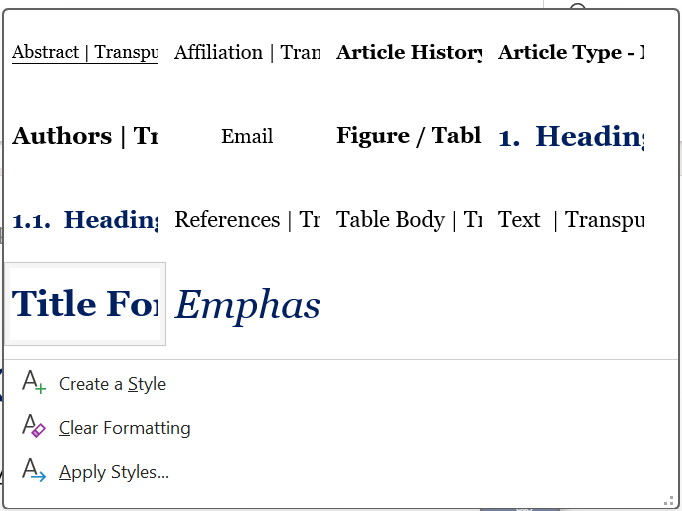
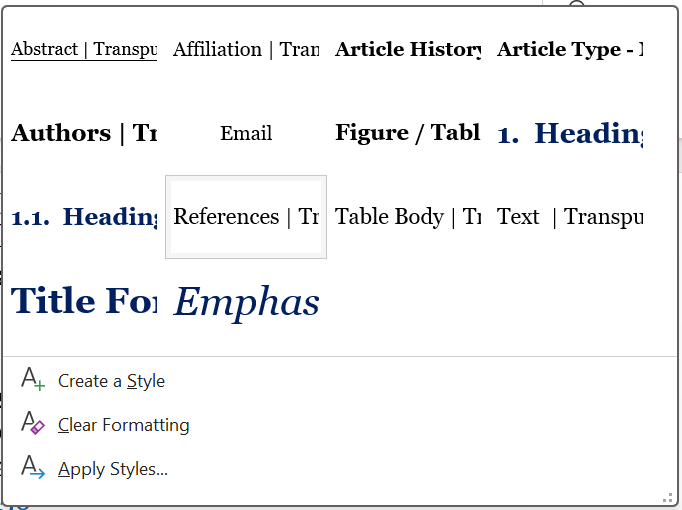
- Write the manuscript using the official manuscript template, applying its paragraph styles rather than manual formatting. Replace every guidance sentence in the template with your own content.
Required: Write your manuscript using the ⬇ Template.
Submission of the Manuscript
Before submitting a manuscript, authors are asked to read and follow the information below.
- The manuscript must be the author’s own original work, free of plagiarism (see Plagiarism Screening), and must not have been published in another journal. Use of AI tools must comply with the journal’s AI Policy.
- The manuscript must be written in English.
- The manuscript must be submitted as a digital file. Microsoft Office (2010 or later) is recommended, with the file extension .rtf, .doc, or .docx. Hard-copy submissions are not accepted.
- The manuscript must follow the page layout and length requirements below. For further technical information, see the Submission Preparation Checklist. Manuscripts are submitted through the Online Submission system.
Important: Before and during submission, authors must read the Peer Review Process, the Publication Timeline, and other related policies, including the Publication Ethics, Editorial Policy, Author Fees, and Copyright and License pages.
Document Format
- Paper and columns: A4 (210 × 297 mm), one column.
- Margins: 2.54 cm on all sides (left, top, right, and bottom); header 0.8 cm; footer 0.9 cm.
- Line spacing: Single, with 0 pt before and 0 pt after.
Page Limitations
The full manuscript must not exceed 8,000 words and must be between 5—20 pages, including references, tables, and figures (appendices excluded).
Manuscript Type
Pharmacology, Medical Reports, Orthopedic, and Illness Details accepts: Original Research Articles, including Basic Studies, Clinical Trials, and Cost-Effectiveness Analyses; Review Articles, including Systematic Literature Reviews, Meta-Analyses, and Bibliometric Studies; Conceptual and Theoretical Papers; Case Reports and Case Studies; Methodological Studies. Submitted manuscripts must be original, unpublished, and not under consideration for publication by another journal or publisher.
For further details, please refer to Manuscript Type
The Structure of Manuscripts
A research article should be arranged in the following order.
(a) Title page: title, authors' names, affiliations and email addresses
(b) Abstract and keywords
(c) Introduction
(d) Literature Review
(e) Methods
(f) Results and Discussion
(g) Conclusion
(h) Acknowledgements (if any)
(i) Conflict of Interest Statement
(j) Author Contributions
(k) Funding Statement
(l) Informed Consent
(m) Ethical Approval
(n) Data Availability
(o) Declaration of Generative AI and AI-assisted Technologies
(p) References
◆ ◆ ◆◆ ◆ ◆
(a) Title page: title, authors' names, affiliations and email addresses
Title
The title should use the fewest possible words that accurately describe the content of the paper. Write it in Title Case, align left and bold, 18 pt. (use Heading - Title Font)
Author(s), Affiliation(s) and Email(s)
List each author’s name (12 pt) with a superscript number linking to the department, faculty, institution, city and country (10 pt). Mark the corresponding author with an asterisk ‘*’ and provide an email address for every author.
Example:
First Author1*, Second Author2, Third Author3, Fourth Author4
1,2Departement of Q, Faculty of E, Universitas R, Surabaya, Indonesia
2-4Departement of T, Universitas Y, Malang, Indonesia
Email: 1) authoremail@gmail.com, 2) authoremail@gmail.com, 3) authoremail@gmail.com
(b) Abstract and keywords
Abstract
A well-prepared abstract enables readers to identify the basic content of a document quickly and accurately, to judge its relevance to their interests, and to decide whether to read the document in its entirety. The abstract must be informative and self-explanatory. It should state the background and the problem, the objective, the method, the major findings and the conclusions, in 150—250 words, written in the past tense.
The abstract must be able to stand alone: do not cite literature, avoid abbreviations as far as possible, and define any essential abbreviation at its first use.
Keywords: Provide 3—5 keywords in English, each capitalised (Title Case) and separated by commas. Keywords are used by indexing and abstracting services and for the volume’s keyword index, so choose terms that classify the paper by subject area and complement those already in the title.
(c) Introduction (Heading 1 | Transpublika)
The introduction stimulates the reader’s interest and provides the background needed to understand the rest of the paper. It must contain three elements: the state of the art, the gap analysis and the research objective. Keep it concise and well structured, and do not divide it into subsections. Do not turn it into a mini review, and do not include general definitions or textbook theory, because the readers are the scientific community.
State of the art. Synthesise recent and relevant literature by grouping findings thematically instead of listing studies one by one. Draw on recent primary literature from reputable journals and conference proceedings, with at least ten references in the introduction.
Example: “Previous studies indicate that [finding] (Author, Year; Author, Year), whereas others report [different finding] (Author, Year).”
Gap analysis. Examine the existing studies and explain why the research needs to be done, how it differs from previous work, and what it contributes (novelty).
Example: “However, few studies have examined [gap], particularly in [context]. This study contributes by [new approach, context, or data].”
Research objective. Conclude with a clear statement of the research objective, research question or hypothesis.
Example: “This study aims to [objective].” or “H1: [hypothesis].”
Tips:
- Begin with a concise background of the problem studied and establish why the study was needed.
- Cite only previous work that has a direct bearing on the present problem; do not give a full history of the topic.
- Define abbreviations and specialised or regional terms.
- Move from the general to the specific: from the real-world problem, to the literature, to your research.
(d) Literature Review
Present the theoretical foundations relevant to the research, related previous studies and the research gap. The section should build a logical foundation that justifies the study and leads into the methods and analysis. Use numbered subsections (for example 2.1 Theory A, 2.2 Theory B, 2.3 Previous Research), cite primary sources, and group related findings, showing where they leave gaps.
Hypothesis development. Develop each hypothesis under its own numbered subsection (for example 2.4.1, 2.4.2), using theory and previous findings to justify the expected relationship between variables, and state the hypothesis clearly.
Example: H1: A has a positive/negative effect on B.
If the study has a research framework, present it as a figure after the last hypothesis, with a caption in the Figure / Table Caption style.
(e) Methods
Explain clearly how the research was conducted, so that readers can evaluate the work and others can replicate it. Describe exactly what was done: what experiments or procedures were run and how, and what, how much, how often, where, when and why equipment and materials were used. Maintain a balance between brevity (not every technical issue can be described) and completeness (enough detail to verify the findings). Previously published methods should be cited, with only relevant modifications described. Name the supplier when a reagent is used and, for epidemiological studies, state the setting, timing and location.
Tips:
- Define the population and the sampling method.
- Describe the instruments and the procedures, including the time frame where relevant.
- Describe the analysis plan and the approaches used to ensure validity and reliability.
- State any assumptions.
- Describe the statistical tests and comparisons; ordinary methods need no comment, while advanced or unusual methods require a citation.
- Describe the scope and limitations of the method.
Ethical considerations. State briefly (if any) in this section, for example: “This study was approved by the Research Ethics Committee of [Institution] (No. [number], [date]). All participants gave informed consent, participation was voluntary, and their identities were kept confidential.” For public secondary data, state the source and that no personal identifiers were used, so ethical approval was not required.
(f) Results and Discussion
The purpose of this section is to state the findings, offer interpretations, explain their implications and suggest future research. It must answer the questions posed in the Introduction, explain how the results support those answers, and show how they fit existing knowledge. Divide the section into 4.1 Research Results (with 4.1.1, 4.1.2 and so on) and 4.2 Discussion (with 4.2.1, 4.2.2 and so on, in Heading 3 style).
Research results. Present the main findings clearly and concisely, supported by tables, figures, statistical analyses or qualitative evidence. Emphasise findings directly related to the research objectives instead of reproducing raw data.
Discussion. Address the research problem, interpret the findings and explain their meaning, and relate them to relevant theories and previous studies, including agreements, differences and unexpected results. Identify the scholarly contribution of the study. Provide commentary rather than a repetition of the results.
Tips:
- State the major findings and explain why they matter.
- Explain how the results relate to expectations and to the literature.
- Consider alternative explanations and acknowledge the study’s limitations.
- Suggest further research.
- Do not over-interpret: the interpretation must not go beyond what the data support, and speculation or inflated claims of importance must be avoided.
Figures and tables
Figures and tables are the most effective way to present results. Captions must be able to stand alone, so that the figure or table is understandable without reading the whole manuscript. Figure and Table should be cited in text and discussed and cited in the manuscript.
Figures:
- High-quality images, at least 300 dpi.
- Caption below the figure, in the Figure / Table Caption style (for example, Figure 1. Figure Title).
- Numbered in order of appearance, centred, and cited and discussed in the text.
- Note: The Editor may request revised figures.
Graphics should be simple but informative and meet the standards of a scholarly publication. Avoid a graphic that merely repeats what already appears in the text.
Tables:
- Editable text, never images. Placed on separate pages at the end of the document.
- Caption above the table, in the same style (for example, Table 1. Table title).
- Numbered in order of appearance, centred, and cited and discussed in the text.
- No vertical rules and no shading in cells. Notes are placed below the table body.
(g) Conclusion
Summarise the key findings, implications, limitations and suggestions concisely, drawing solely on the results of the study. The conclusion helps the reader understand why the research matters. It must answer the research objectives and show how the work advances the field, without repeating the abstract or listing results.
- Do not cite previous studies or use numbering.
- Statements that something was “investigated” or “studied” are not conclusions.
- Do not introduce new arguments, evidence or ideas, and keep quotations and statistics in the body of the paper.
- One well-developed paragraph is usually sufficient; two or three may be used where needed.
(h) Acknowledgements (if any)
Acknowledge individuals or institutions that contributed to the research but do not meet the criteria for authorship, such as those who provided facilities, data access, materials, technical help, proofreading or critical comments. State why each person is acknowledged and obtain their permission first. Do not acknowledge one of the authors, and do not apologise for the quality of the manuscript. Financial support must be reported in the Funding Statement, not here. Delete this section if it does not apply.
Declarations
This section has been updated in response to the announcement of Updated Journal Policies and Manuscript Template Adjustment. In line with Director General Decree No. 374/DST/D.D1/HM.01.01/2026, the template will be applied gradually in the current issue following the announcement, so it may differ slightly from work published before the announcement. This change was made for the purpose of improvement.
(i) Conflict of Interest Statement
Declare any financial or personal relationships that could influence the work. If there are none: “The authors declare that there is no conflict of interest regarding the publication of this paper.”
For further details see Conflict of Interest Policy
(j) Author Contributions
State each author’s contribution by initials, using the 14 roles of the Contributor Roles Taxonomy (CRediT).
Example: A.B.: Conceptualization, Investigation, Formal Analysis, Writing – Original Draft. C.D.: Methodology, Supervision, Validation, Writing – Review & Editing.
For further details see Authorship
(k) Funding Statement
State the funding body, grant name and grant number, and whether the funder had any role in the study design, data analysis or decision to publish.
If there was no funding: “No funding was received for this research.”
(l) Informed Consent
State whether informed consent was obtained, or that it was not required for studies without human subjects.
For further details see Research Ethics Policy
(m) Ethical Approval
Give the name of the ethics committee and the reference number for studies involving human participants, or state that the article contains no studies with human participants performed by the authors.
For further details see Research Ethics Policy
(n) Data Availability
State where the data can be found, for example: “The data that support the findings of this study are available from the corresponding author [A.B.] upon reasonable request.”
For further details see Data Availability
(o) Declaration of Generative AI and AI-assisted Technologies
Authors must transparently disclose any use of generative AI or AI-assisted tools in preparing the manuscript, naming the tool (with version and developer), the purpose and the extent of use, and confirming that all output was critically reviewed and edited and that the authors take full responsibility for the content.
Example: “During the preparation of this manuscript, the authors utilized [AI tool name, version, developer] for [purpose and extent of use]. All outputs generated by the AI tool were critically reviewed and edited by the authors, who assume full responsibility for the integrity and content of this manuscript.”
For further details see AI Policy
(p) References
References must be relevant, accurate, verifiable, traceable and drawn from legitimate scholarly sources, following APA 7th edition (a DOI or available link is preferred). Every work cited in the text must be listed, and every listed work must be cited, with consistent spelling of author names and years. Footnotes and endnotes must not be used. Follow the APA 7th guidelines for nondiscriminatory language regarding gender, sexual orientation, racial and ethnic identity, disabilities and age.
Standards:
- Quantity: minimum of 20 entries.
- Primary sources: at least 80% primary scholarly sources.
- Recency: at least 80% published within the last 10 years.
- Indexed journals: more than 40% from reputable international journals indexed in Scopus or Web of Science, where applicable to the manuscript type and field.
- Layout: single spacing, Georgia 11 pt, one alphabetical list without type headings; apply the References heading style after inserting the bibliography.
- Software: Mendeley is preferred; EndNote and Zotero are also acceptable.
(use References heading)
Note: References and citations that are fabricated, non-existent, irrelevant, unverifiable, manipulated, misleading, or AI-hallucinated are prohibited. Authors are responsible for verifying every reference before submission. Violations are considered research misconduct, and any act of misconduct will be handled in accordance with the journal’s Research Misconduct policy.
Examples
Journal article
Matakena, S., Mardhiyah, A., & Siregar, O. M. (2023). Effect of work-life balance and emotional intelligence on employee performance. Journal of Humanities, Social Sciences and Business, 3(2), 283-294. https://doi.org/10.55047/jhssb.v3i2.878
Conference proceedings
Lee, G. (2024). AI-based writing feedback in ESP: Leveraging ChatGPT for writing business cover letters among Korean university students. In Proceedings of the International CALL Research Conference (pp. 131-136). https://doi.org/10.29140/9780648184485-20
Data set
Badan Pusat Statistik. (2021). Jumlah koperasi menurut jenis koperasi dan kecamatan di Kabupaten Malang, 2020 [Data set]. https://malangkab.bps.go.id/id/statistics-table/1/ODI0IzE=/jumlah-koperasi-menurut-jenis-koperasi-dan-kecamatan--di-kabupaten-malang--2020.html
Book
Sugiyono. (2019). Metodologi penelitian kuantitatif, kualitatif dan R&D. Bandung: Alfabeta.
Permission requirements: Lengthy quotations (generally 400 cumulative words or more from one source) require written permission from the copyright holder for reproduction. Previously published tables or figures that are used in their entirety, in part, or adapted also require written permission from the copyright holder. It is the author’s responsibility to secure such permission, and a copy of the publisher’s written permission must be provided to the Editor immediately upon acceptance for publication. For details, see the Data Availability section.